

How to troubleshoot common problems with a house dehumidifier?
Jul 09, 2025
Hey there! As a supplier of house dehumidifiers, I've seen my fair share of common problems that folks run into with these nifty devices. Today, I'm gonna walk you through some easy - peasy troubleshooting steps for those typical issues.
1. Dehumidifier Not Turning On
One of the most common headaches is when your dehumidifier just won't fire up. First things first, check the power source. Sounds simple, but you'd be surprised how many times it's just a loose plug or a tripped circuit breaker. Make sure the power cord is securely plugged into a working outlet. If you're using an extension cord, it might be a culprit. Extension cords can sometimes have a lower amperage rating, which may not provide enough power for the dehumidifier. Try plugging it directly into a wall outlet.
Another thing to look at is the power switch. Sounds obvious, but it can get accidentally turned off. Some dehumidifiers have a child - lock feature. If you have kids around, they might have activated it without you knowing. Check the user manual to see how to disable the child - lock if that's the case.
If all of the above checks out and it still won't turn on, there could be an issue with the internal components. At this point, it's best to contact a professional technician or reach out to us. We've got a team of experts who can help diagnose and fix the problem.
2. Dehumidifier Not Removing Enough Moisture
If your dehumidifier seems to be running, but the air in your room still feels damp, there are a few things you can do.
First, check the humidity setting. Maybe you've set it too high. If the target humidity level is close to the current humidity in the room, the dehumidifier won't work as hard to remove moisture. Try lowering the setting to a more appropriate level. For most rooms, a humidity level between 30% - 50% is ideal.
The size of the dehumidifier also matters. If you're trying to dehumidify a large room with a small - capacity dehumidifier, it won't be able to keep up. Make sure you've chosen the right - sized dehumidifier for your space. You can refer to the product specifications or give us a call, and we'll help you pick the perfect one.
The air filter is another crucial factor. A dirty air filter restricts airflow, which reduces the dehumidifier's efficiency. Check the filter regularly and clean or replace it as recommended in the user manual. Usually, it's a good idea to clean the filter every month or so, depending on how often you use the dehumidifier.

3. Dehumidifier Making Loud Noises
Nobody likes a noisy dehumidifier. If yours is making a racket, there are a few possible causes.
The first thing to check is if the dehumidifier is sitting on a level surface. An uneven surface can cause the unit to vibrate and make noise. Try moving it to a flat, stable area.
Sometimes, there could be loose parts inside the dehumidifier. Open the access panel (if it's easy to do so and you're comfortable with it) and check for any loose screws or components. Tighten them up if you find any.
The fan might also be the problem. Over time, the fan blades can get dirty or bent, which can cause noise. You can try cleaning the fan blades gently with a soft brush. If the blades are bent, it's best to have a professional replace them.
4. Water Leaking from the Dehumidifier
Water leakage is a common problem that can be a real hassle.
Check the water collection bucket first. If it's full and hasn't been emptied, water might overflow. Empty the bucket regularly, and make sure it's properly seated in the dehumidifier. Sometimes, the bucket can be misaligned, causing water to leak out.
The drain hose could also be an issue. If it's kinked or blocked, water won't drain properly. Check the hose for any kinks and straighten them out. If there's a blockage, you can try flushing the hose with water to clear it.
In some cases, there could be a crack in the water collection bucket or the dehumidifier's housing. If you find a crack, it's time to replace the damaged part. You can order replacement parts from us or have a technician do the replacement for you.
5. Frost Build - Up on the Coils
Frost on the coils can reduce the dehumidifier's efficiency.
The temperature in the room might be too low. Most dehumidifiers are designed to work in rooms with a temperature above 60°F (15°C). If the room is colder than that, frost can form on the coils. Try moving the dehumidifier to a warmer area or using a space heater to raise the room temperature.
The airflow might also be restricted. As mentioned earlier, a dirty air filter or blocked vents can cause poor airflow, which can lead to frost build - up. Clean the air filter and make sure the vents are clear.
Recommended Products
If you're in the market for a new dehumidifier or looking to upgrade, we've got some great options. Check out our Silica Gel Dryer, which is perfect for small spaces and has excellent moisture - removing capabilities.
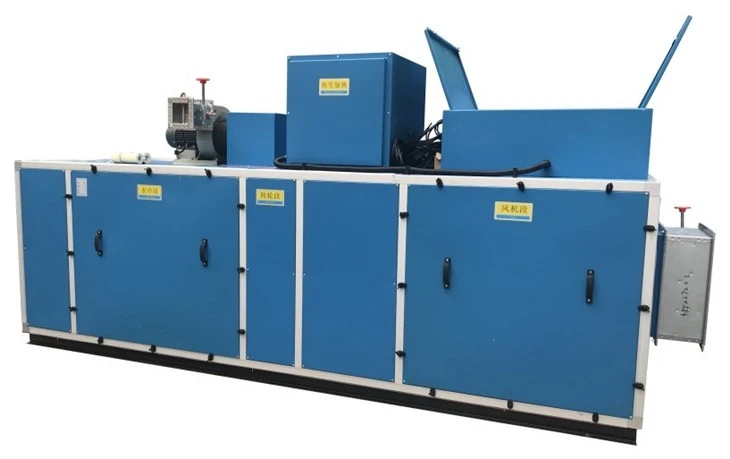
For larger spaces, like factories, our 1000L/day Classic Temperature Controlling Rotary Desiccant Drying Dehumidifier, With Superpower Capacity, For Factory is a beast. It can handle high humidity levels and keep your large area dry.
And if you're dealing with a granary, our Granary rotary wheel Dehumidifiers are specifically designed to meet the unique humidity control needs of such environments.
Let's Connect
If you're still having problems with your dehumidifier or are interested in purchasing a new one, don't hesitate to reach out. We're here to help you find the best solution for your humidity control needs. Whether it's troubleshooting an existing unit or choosing the right new dehumidifier, our team of experts is just a message away.
References
- Dehumidifier user manuals
- Industry best practices for dehumidifier maintenance and troubleshooting