

What is the power consumption of different types of household dehumidifiers?
Jul 28, 2025
Hey there! As a household dehumidifier supplier, I've seen firsthand how crucial it is to understand the power consumption of different types of dehumidifiers. Not only does it affect your electricity bill, but it also plays a significant role in choosing the right dehumidifier for your needs. So, let's dive into the world of dehumidifier power consumption!
Compressor Dehumidifiers
Compressor dehumidifiers are the most common type you'll find in households. They work by drawing in moist air, passing it over cold coils to condense the moisture, and then expelling the dry air back into the room. These dehumidifiers are great for larger spaces and areas with high humidity levels.
The power consumption of compressor dehumidifiers can vary widely depending on their size and capacity. Smaller units, typically with a capacity of around 20 - 30 pints per day, might use anywhere from 200 - 300 watts. On the other hand, larger units with a capacity of 50 - 70 pints per day can consume 400 - 600 watts or more.
For example, if you have a small bedroom or a closet, a 20 - pint compressor dehumidifier would be sufficient. Running it for 8 hours a day at 250 watts, it would consume 2 kilowatt - hours (kWh) of electricity per day. At an average electricity rate of $0.15 per kWh, that's about $0.30 per day or around $9 per month.

However, if you're using a large 70 - pint compressor dehumidifier in a basement or a large living area, running it for 8 hours a day at 600 watts, it would consume 4.8 kWh per day. This would cost you about $0.72 per day or approximately $21.60 per month.
Desiccant Dehumidifiers
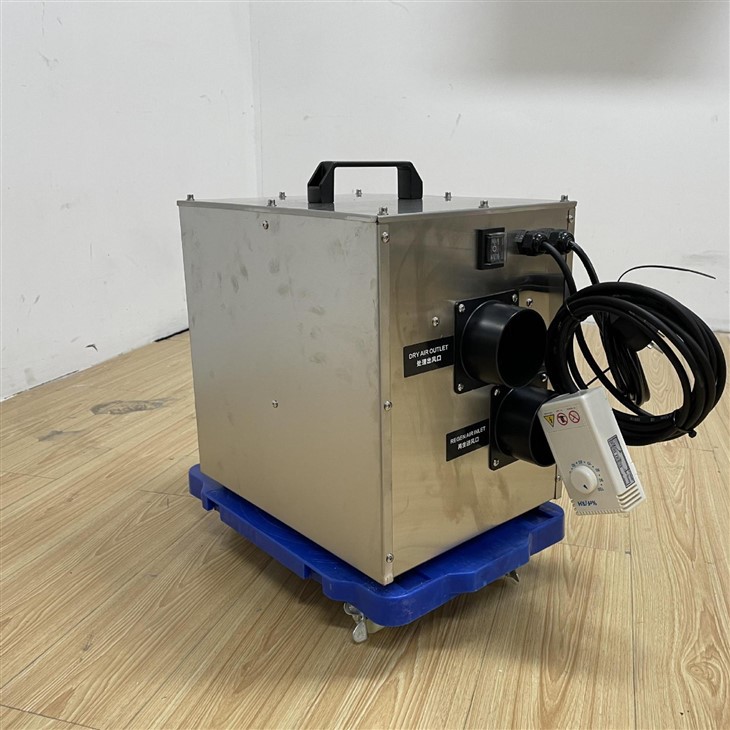
Desiccant dehumidifiers work differently from compressor dehumidifiers. They use a desiccant material, like silica gel, to absorb moisture from the air. These dehumidifiers are more effective in colder temperatures and are often used in areas where compressor dehumidifiers might not work as well.
There are different types of desiccant dehumidifiers available. For instance, the Low Temperature Desiccant Dehumidifiers are designed specifically for cold environments.
Desiccant dehumidifiers generally consume less power than compressor dehumidifiers, especially the smaller models. A small desiccant dehumidifier, like the Moisture Trap Desiccant Dehumidifier, might use around 100 - 200 watts. A larger desiccant dehumidifier could use up to 300 - 400 watts.
Let's say you have a small desiccant dehumidifier that uses 150 watts. Running it for 8 hours a day, it would consume 1.2 kWh per day. At the same electricity rate of $0.15 per kWh, it would cost you about $0.18 per day or around $5.40 per month.
Portable Narrow Space Desiccant Dehumidifiers
Portable narrow - space desiccant dehumidifiers, such as the Portable Narrow Space Desiccant Dehumidifier, are designed for small, confined areas like cabinets, closets, or small bathrooms.
These dehumidifiers are usually very energy - efficient. They typically consume between 50 - 100 watts. If you have a 70 - watt portable narrow - space desiccant dehumidifier and run it for 8 hours a day, it would consume 0.56 kWh per day. At $0.15 per kWh, it would cost you just $0.084 per day or about $2.52 per month.
Factors Affecting Power Consumption
Several factors can affect the power consumption of dehumidifiers. Humidity level is a big one. The higher the humidity in the air, the harder the dehumidifier has to work, and the more power it will consume. For example, if you live in a coastal area with consistently high humidity, your dehumidifier will run more often and use more electricity compared to someone living in a drier climate.
Room size also matters. A dehumidifier that's too small for a large room will have to run continuously to try and reduce the humidity, resulting in higher power consumption. On the other hand, using an oversized dehumidifier in a small room can also be wasteful as it might cycle on and off too frequently.
Temperature is another factor, especially for compressor dehumidifiers. They are less efficient in cold temperatures and might consume more power to maintain the same level of dehumidification. Desiccant dehumidifiers, on the other hand, are more efficient in colder conditions.
Energy - Saving Tips
If you're looking to save on energy costs while using a dehumidifier, here are some tips. First, make sure to set the humidity level correctly. Most dehumidifiers allow you to set a target humidity level. Setting it too low will make the dehumidifier run more often and use more power. A good target humidity level for most households is between 30% - 50%.
Second, clean the air filter regularly. A dirty air filter can restrict airflow, making the dehumidifier work harder and consume more power. Check the manufacturer's instructions for how often to clean or replace the filter.
Third, use the dehumidifier in the right size room. As mentioned earlier, using the right - sized dehumidifier for your space will ensure it runs efficiently and doesn't waste energy.
Choosing the Right Dehumidifier Based on Power Consumption
When choosing a dehumidifier, it's important to consider your specific needs and the power consumption. If you have a large area with high humidity, a compressor dehumidifier might be the best choice, even though it consumes more power. However, if you're in a colder area or have a small space, a desiccant dehumidifier, especially a portable narrow - space one, could be more energy - efficient and cost - effective.
So, if you're in the market for a dehumidifier and want to know more about the power consumption of different models, or if you're looking for the best dehumidifier for your specific situation, feel free to reach out. We're here to help you make an informed decision and find the right dehumidifier for your home. Whether you need a compressor dehumidifier for a large space or a desiccant dehumidifier for a cold environment, we've got you covered. Let's start a conversation and find the perfect dehumidifier for you!
References
- Various product manuals and specifications from dehumidifier manufacturers.
- Energy efficiency studies on household dehumidifiers.