

How does a ducted dehumidifier work in a humid basement?
Sep 12, 2025
A humid basement can be a real headache for homeowners. It not only creates an uncomfortable living environment but also leads to a host of problems such as mold growth, musty odors, and damage to stored items. One effective solution to combat basement humidity is a ducted dehumidifier. As a ducted dehumidifier supplier, I'm here to explain how these systems work and why they're a great choice for a humid basement.
Understanding the Problem of Basement Humidity
Before delving into how a ducted dehumidifier works, it's essential to understand why basements tend to be so humid. Basements are below ground level, which means they're in close contact with the soil. The soil can hold a significant amount of moisture, and this moisture can seep into the basement through the foundation walls and floor. Additionally, poor ventilation in basements can trap humid air, leading to an increase in relative humidity levels.
High humidity in a basement can cause a variety of issues. Mold and mildew thrive in damp environments, and their presence can trigger allergic reactions and respiratory problems. Musty odors are also a common symptom of high humidity, which can make the basement unpleasant to use. Over time, high humidity can also damage wooden furniture, flooring, and stored items, leading to costly repairs and replacements.
How a Ducted Dehumidifier Works
A ducted dehumidifier is a sophisticated system designed to remove excess moisture from the air in a basement. Unlike portable dehumidifiers, which are limited in their coverage area, ducted dehumidifiers can be integrated into the existing HVAC system to provide whole-house dehumidification. Here's a step-by-step breakdown of how a ducted dehumidifier works:
1. Air Intake
The process begins with the intake of humid air from the basement. The ducted dehumidifier is connected to the ductwork in the basement, which allows it to draw in air from multiple areas. This ensures that the entire basement is effectively dehumidified, rather than just a small area around a portable dehumidifier.
2. Cooling and Condensation
Once the humid air is drawn into the dehumidifier, it passes over a series of cold coils. These coils are cooled by a refrigerant, which causes the water vapor in the air to condense into liquid water. This process is similar to how a cold glass of water forms condensation on a hot day. As the water vapor condenses, it drips down into a collection tray or is drained away through a hose.
3. Reheating the Air
After the moisture has been removed from the air, the now-dry air is reheated before being returned to the basement. This is important because the cooling process can make the air too cold, which can be uncomfortable. The reheating process ensures that the air returned to the basement is at a comfortable temperature.
4. Air Distribution
The dry, reheated air is then distributed back into the basement through the ductwork. The ducted dehumidifier can be programmed to operate at a specific humidity level, which allows it to maintain a consistent level of humidity in the basement. This helps to prevent the growth of mold and mildew and keeps the basement comfortable and dry.
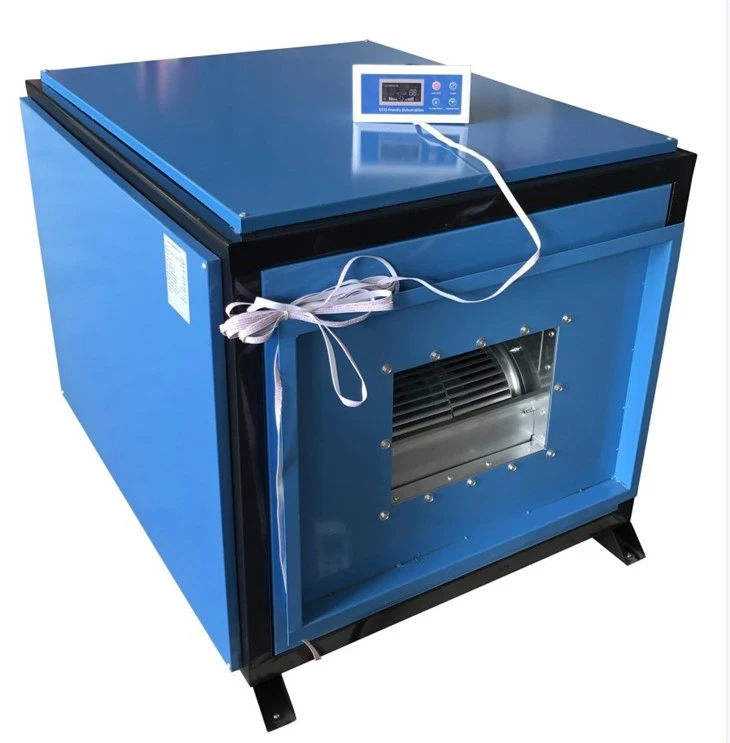

Benefits of a Ducted Dehumidifier in a Basement
There are several benefits to using a ducted dehumidifier in a basement:
1. Whole-House Dehumidification
As mentioned earlier, a ducted dehumidifier can be integrated into the existing HVAC system to provide whole-house dehumidification. This means that not only will the basement be dehumidified, but the rest of the house will also benefit from reduced humidity levels. This can help to improve indoor air quality and prevent the growth of mold and mildew throughout the house.
2. Energy Efficiency
Ducted dehumidifiers are generally more energy-efficient than portable dehumidifiers. This is because they are designed to work in conjunction with the HVAC system, which allows them to take advantage of the existing ductwork and fans. Additionally, ducted dehumidifiers can be programmed to operate at specific times and humidity levels, which helps to reduce energy consumption.
3. Quiet Operation
Unlike portable dehumidifiers, which can be noisy, ducted dehumidifiers are designed to operate quietly. This is because they are installed in the ductwork, which helps to muffle the sound of the compressor and fans. This makes them a great choice for basements that are used as living spaces or for storage.
4. Customizable Installation
Ducted dehumidifiers can be customized to fit the specific needs of your basement. They can be installed in a variety of locations, including the attic, crawl space, or mechanical room. Additionally, they can be configured to work with different types of HVAC systems, including forced air, radiant heat, and geothermal systems.
Choosing the Right Ducted Dehumidifier for Your Basement
When choosing a ducted dehumidifier for your basement, there are several factors to consider:
1. Size
The size of the ducted dehumidifier you need will depend on the size of your basement and the level of humidity. A larger basement or a basement with high humidity levels will require a larger dehumidifier. It's important to choose a dehumidifier that is appropriately sized for your needs to ensure optimal performance.
2. Capacity
The capacity of a ducted dehumidifier is measured in pints per day. This refers to the amount of water the dehumidifier can remove from the air in a 24-hour period. A higher capacity dehumidifier will be able to remove more moisture from the air, which is ideal for basements with high humidity levels.
3. Energy Efficiency
As mentioned earlier, energy efficiency is an important consideration when choosing a ducted dehumidifier. Look for a dehumidifier that has an Energy Star rating, which indicates that it meets strict energy efficiency guidelines set by the U.S. Environmental Protection Agency.
4. Features
Some ducted dehumidifiers come with additional features, such as humidity sensors, programmable timers, and remote controls. These features can make the dehumidifier more convenient to use and allow you to customize its operation to meet your specific needs.
Our Ducted Dehumidifier Products
As a ducted dehumidifier supplier, we offer a range of high-quality products to meet the needs of our customers. Our Ducted Dehumidifier is designed to provide efficient and effective dehumidification for basements and other areas of the home. It features a powerful compressor and a large capacity, which allows it to remove a significant amount of moisture from the air. Additionally, our ducted dehumidifier is energy-efficient and operates quietly, making it a great choice for any home.
We also offer the New Air Dehumidifier, which is a compact and portable dehumidifier that is ideal for small basements or areas with limited space. This dehumidifier is easy to use and can be moved from room to room as needed.
For those who have a greenhouse in their basement, we offer the Greenhouse Ceiling Mounted Dehumidifier. This dehumidifier is specifically designed to meet the unique needs of a greenhouse, including high humidity levels and the need for precise temperature control.
Contact Us for Purchase and Consultation
If you're interested in learning more about our ducted dehumidifier products or would like to discuss your specific needs, please don't hesitate to contact us. Our team of experts is available to answer your questions and provide you with a free consultation. We can help you choose the right ducted dehumidifier for your basement and ensure that it is installed correctly for optimal performance.
Investing in a ducted dehumidifier is a smart decision for any homeowner with a humid basement. It can help to improve indoor air quality, prevent the growth of mold and mildew, and protect your home and belongings from damage. Contact us today to take the first step towards a dry and comfortable basement.
References
ASHRAE. (2017). ASHRAE Handbook - Fundamentals. American Society of Heating, Refrigerating and Air-Conditioning Engineers.
Carrier. (2021). Dehumidification Basics. Carrier Corporation.
Mold and Mildew Prevention. (n.d.). Environmental Protection Agency.